
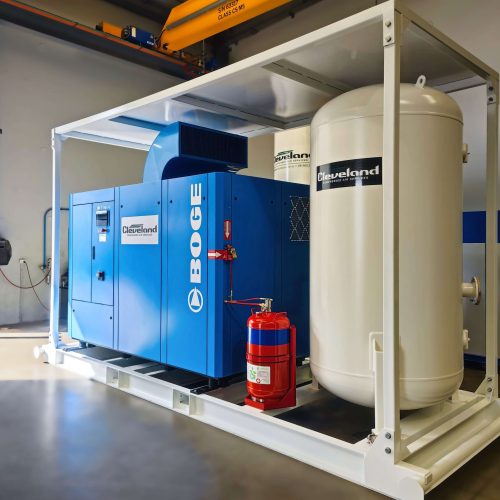
oil vs oil-free compressors
When you’re specifying a new compressed air system for your facility, one of the first decisions you’ll face is whether to go with an oil-lubricated or oil-free compressor. It’s not just about the machinery itself. This choice affects your product quality, regulatory compliance, maintenance schedules, and long-term operating costs.
At Cleveland Compressors, we’ve helped hundreds of Australian businesses navigate this decision over the past 30 years. The right answer isn’t always obvious, and it varies depending on your specific application and operational requirements.
Article Highlights
- Oil-lubricated compressors inject oil into the compression chamber for cooling and sealing, whilst oil-free models use precision coatings and external gears to eliminate oil contact with compressed air.
- Oil-free compressors can deliver ISO 8573-1 Class 0 air quality, making them essential for food processing, pharmaceuticals, and electronics manufacturing, where contamination risks can’t be tolerated.
- Your choice depends on air purity requirements, maintenance capacity, and application type rather than upfront cost alone.
How Oil-Lubricated Compressors Work
Oil-lubricated compressors (sometimes called oil-injected or oil-flooded compressors) inject lubricating oil directly into the compression chamber. This oil serves three critical functions: it seals the clearances between moving parts, absorbs the heat generated during compression, and lubricates bearings and rotors.
In a typical rotary screw compressor, oil mixes with the air during compression. The discharge air then passes through an oil separator tank, where most of the oil is removed and recirculated back into the system. Even after separation, the compressed air still contains oil aerosols, typically around 3–10 mg/m³ before filtration.
To reduce oil content further, downstream filters (coalescing and activated carbon) can bring oil levels down to 0.01 mg/m³ or lower, achieving ISO Class 1 air quality. These filters work well but add pressure drops of 0.1–0.3 bar and require regular replacement, adding to your ongoing maintenance costs.
How Do Oil-Free Air Compressors Work?
Oil-free air compressors take a fundamentally different approach. No lubricating oil enters the compression chamber at all. Instead, these machines rely on precision engineering and advanced materials to prevent metal-to-metal contact.
There are three main types:
Dry screw and scroll compressors use precision-machined rotors with PTFE or PEEK coatings. External timing gears keep the rotors synchronised without touching, eliminating the need for oil in the air path. These units can deliver true ISO 8573-1 Class 0 air straight from the compressor.
Water-injected compressors use food-grade water instead of oil for sealing and cooling. The water evaporates during compression, leaving no hydrocarbon residue. These systems require a de-ionising circuit to maintain water quality but offer excellent energy efficiency.
Oil-free boosters are two-stage piston or screw units that take existing plant air from 7–10 bar and boost it to 40 bar or higher for applications like PET bottle blowing.
Cleveland’s Oil-Free Range

BOGE EO-TR 6 Scroll Compressor (up to 11 kW)
The BOGE EO-TR 6 delivers 100% oil-free compressed air through advanced scroll technology. Ideal for medical, dental, and laboratory applications where air purity is non-negotiable. Compact footprint and quiet operation make it perfect for installations with limited space.
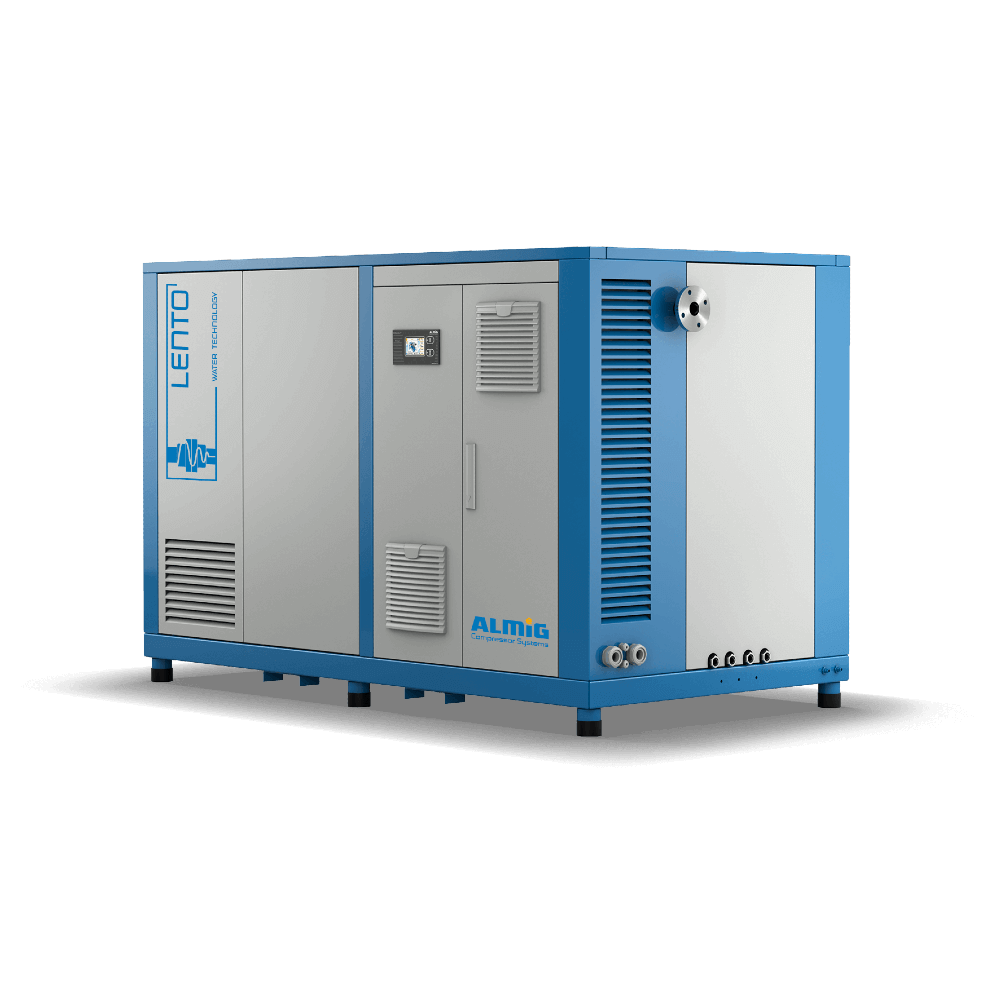
ALMiG LENTO Water-Injected Screw Compressor
The ALMiG LENTO uses food-grade water injection instead of oil, combining the efficiency of screw technology with guaranteed oil-free air. Lower discharge temperatures and reduced energy consumption make this an excellent choice for food processing and pharmaceutical facilities.
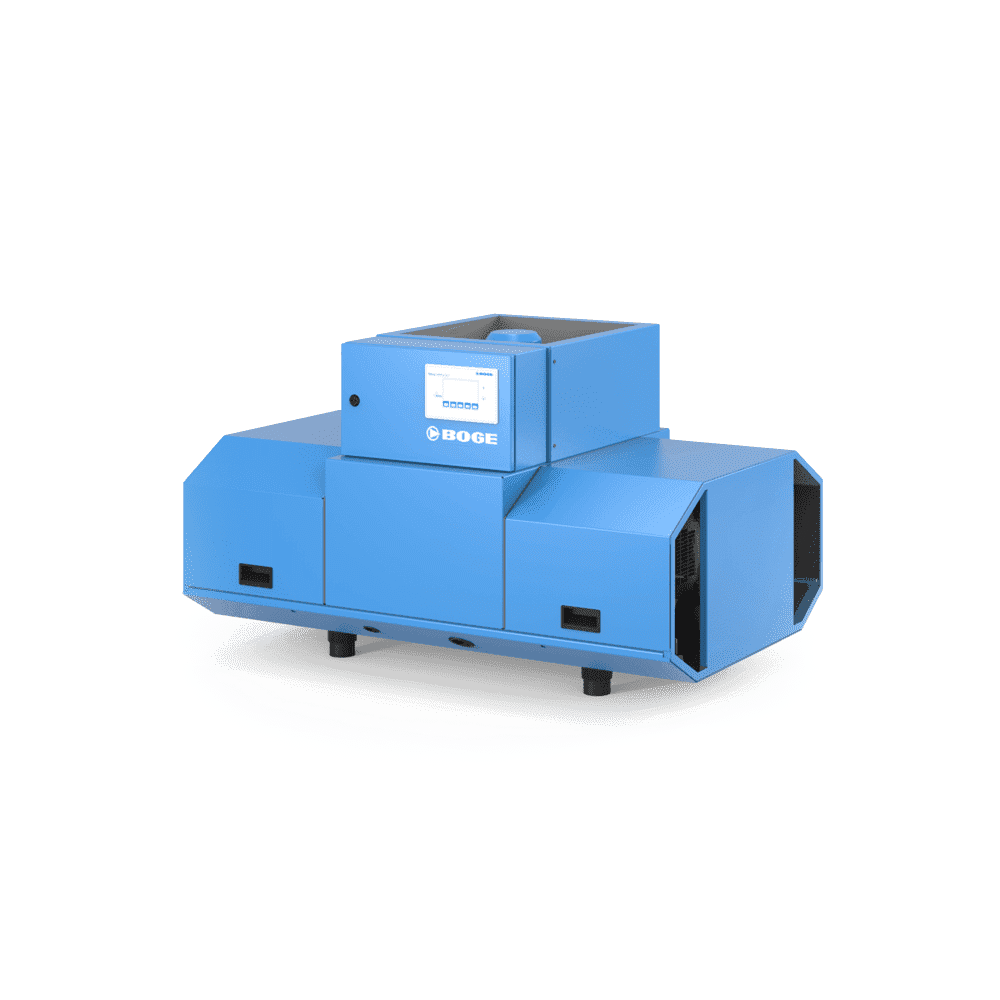
The BOGE K booster takes existing compressed air from 7–10 bar and elevates it to 40 bar or higher without introducing oil contamination. Two-stage crosshead design ensures reliable performance for PET bottle blowing and other high-pressure applications.
See More Oil-Free Air Compressors
Air Quality and Contamination Risks
This is where the two technologies diverge most significantly.
Oil-lubricated compressors always carry some risk of oil carry-over into your compressed air system. Even with excellent filtration, trace amounts of oil can reach your end-use equipment. For general workshop applications or pneumatic tools, this isn’t usually a problem.
But in sensitive applications, even tiny amounts of oil contamination can be catastrophic. A single oil droplet in a pharmaceutical manufacturing line can spoil an entire batch. In food processing, oil contamination can cause product spoilage and serious compliance issues with HACCP and FSANZ regulations.
Australia’s food and beverage industry generates over $132 billion annually and represents the country’s largest manufacturing sector. With such high stakes, more facilities are switching to oil-free technology to eliminate contamination risks entirely.
Oil-free compressors deliver guaranteed Class 0 air quality, meaning zero risk of oil contamination. This makes regulatory audits simpler and gives you complete peace of mind that your compressed air won’t compromise your product quality.
Maintenance Requirements and Operating Costs
Oil-lubricated systems need regular oil changes, typically every 2,000–4,000 operating hours, depending on the model. You’ll also need to replace oil filters, air-oil separators, and downstream air treatment filters. Used compressor oil must be disposed of according to Australia’s National Environment Protection (Used Oil) Measure, adding another layer of compliance.
Oil-free compressors remove the need for oil-related maintenance tasks such as buying compressor oil, changing oil filters, and managing used oil disposal. However, they still require regular maintenance. In particular, air intake filtration is critical. Without an oil film to protect internal components, dust or airborne contaminants can accelerate wear on precision-engineered coatings, bearings, and seals if not properly controlled.
In practice, the overall maintenance effort is often comparable between oil-lubricated and oil-free compressors, but it is directed at different components and service requirements. What matters most is having access to experienced technicians who understand the specific design and operating demands of your equipment.
Our service and repair team can support both oil-lubricated and oil-free systems across Western Australia.
Performance and Efficiency Considerations
Oil-injected screw air compressors typically offer higher power density and can handle higher discharge pressures (13–15 bar) more easily. The oil cooling is extremely effective, keeping compression temperatures manageable even under heavy loads.
Oil-free compressors have caught up significantly in recent years. Advanced coatings like PTFE and Diamond-Like Carbon have closed the durability gap with oil-flooded units. Water-injected models can deliver up to 15% energy savings compared to traditional dry screw compressors.
Variable Speed Drive (VSD) technology is now standard on premium oil-free rotary screws, automatically adjusting motor speed to match air demand. Some units even include heat recovery packages that reclaim up to 80% of motor heat as hot water, further improving overall system efficiency.
In Australia’s rising energy cost environment, these efficiency gains matter. Compressed air systems typically account for 10–15% of industrial electricity consumption, so even small improvements in efficiency translate to meaningful cost savings over the equipment’s service life.
Cleveland’s Oil-Lubricated Range
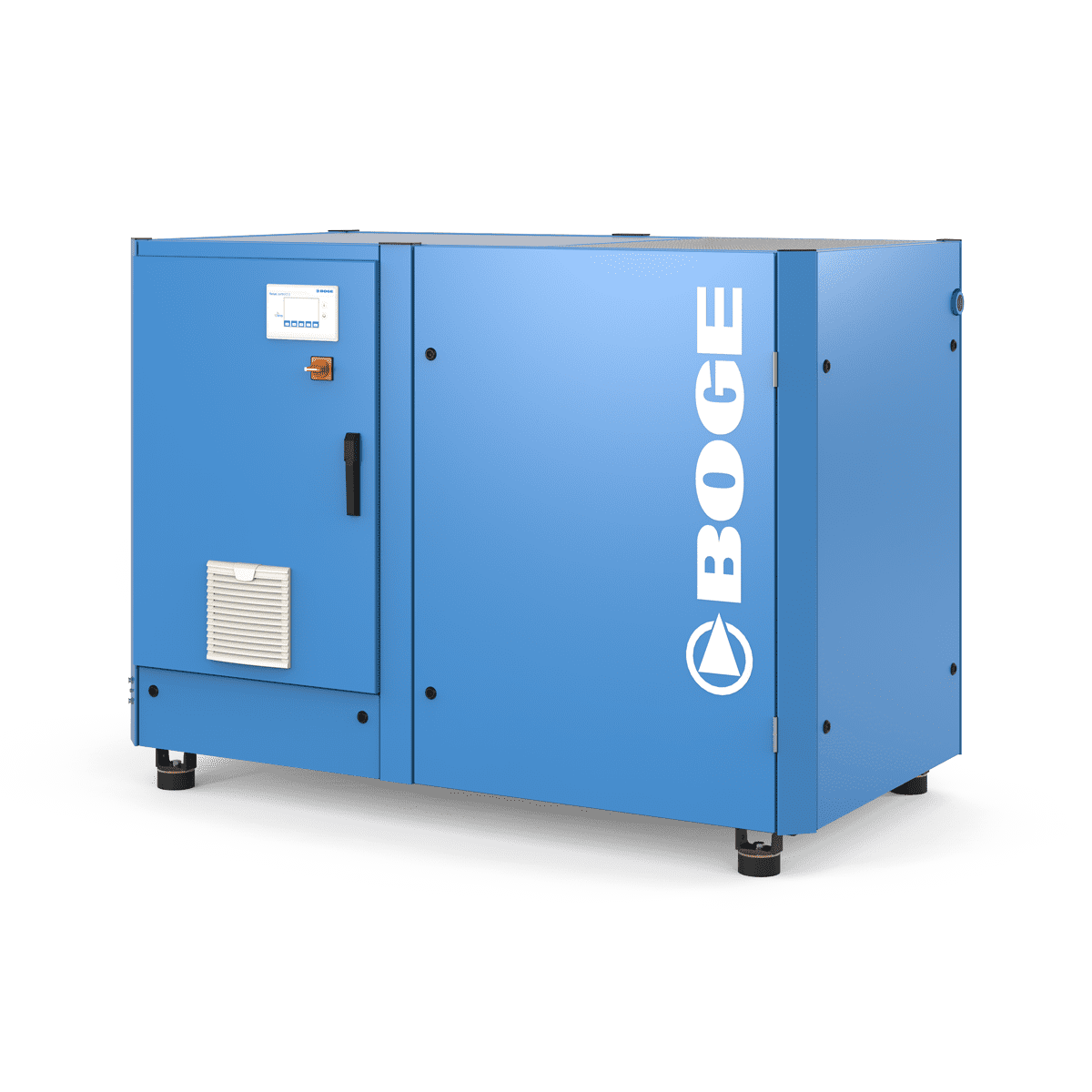 BOGE S Rotary Screw Compressor (up to 75 kW)
The BOGE S series combines robust construction with efficient operation for general industrial applications. Proven rotary screw technology delivers reliable compressed air for manufacturing, workshops, and plant air systems.
 BOGE SDF Rotary Screw (up to 45 kW)
The BOGE SDF offers direct-drive efficiency in a compact package. Ideal for medium-duty applications where space is limited but performance can’t be compromised. Integrated aftercooler and moisture separator included.
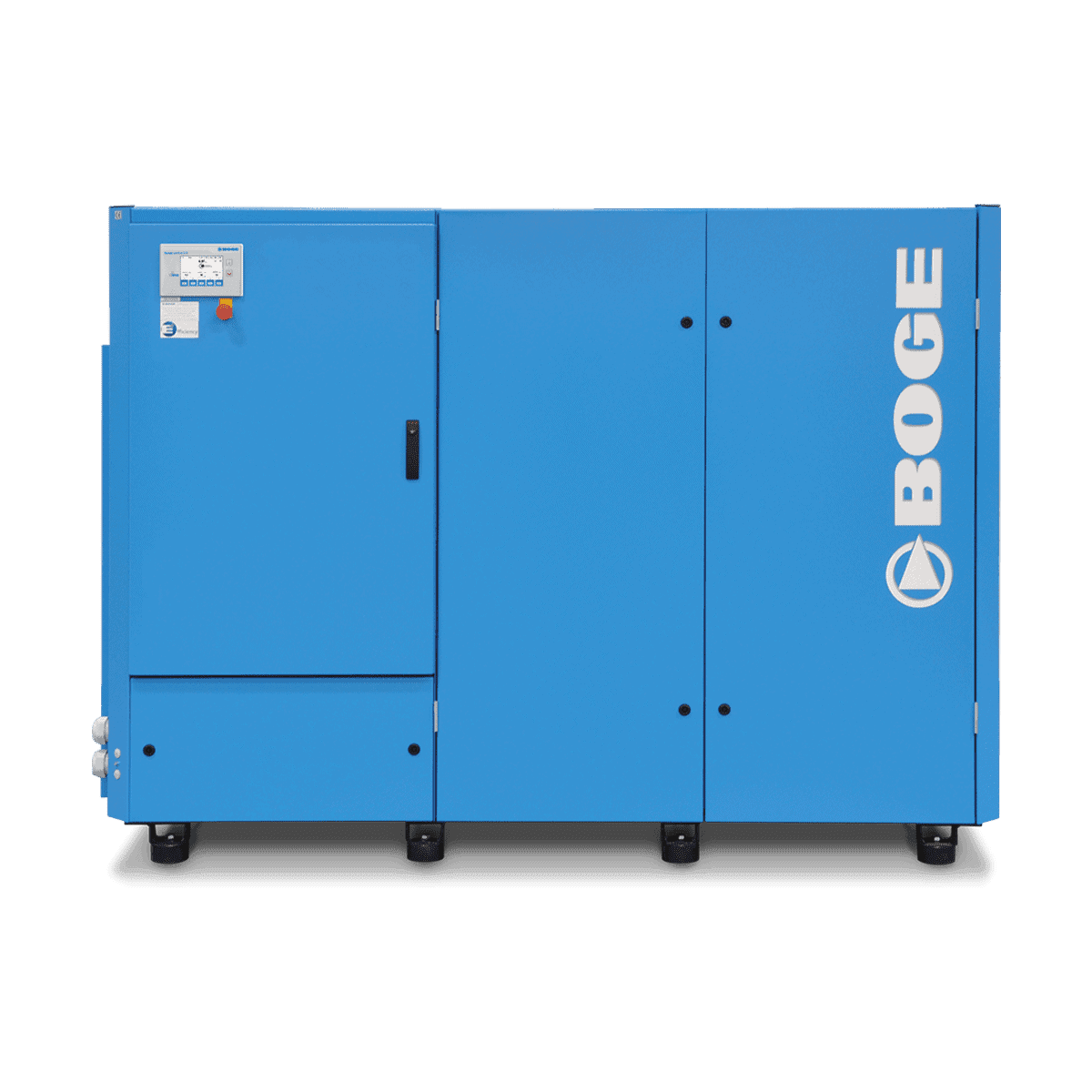 BOGE SF Rotary Screw (up to 110 kW)
The BOGE SF series handles heavy-duty industrial demands with ease. Frequency-controlled models optimise energy consumption by matching air production to actual demand, delivering significant cost savings in variable-load applications.
Making the Right Choice
The oil vs oil-free compressor decision ultimately comes down to your specific application requirements, regulatory environment, and operational priorities.
If your compressed air contacts products, meets strict purity standards, or operates in food, pharmaceutical, or electronics environments, oil-free technology is the clear choice. The elimination of contamination risk and simpler regulatory compliance outweigh any other considerations.
For general manufacturing, workshops, and heavy industrial applications where air purity isn’t critical, oil-lubricated compressors offer proven performance and can be more straightforward to maintain if you have the right support in place.
Our team at Cleveland Compressors can help you evaluate your specific requirements and recommend the right solution for your facility. We offer comprehensive support from initial consultation through installation and ongoing maintenance, ensuring your compressed air system delivers reliable performance for years to come.
Ready to discuss which compressor technology suits your operation? Get in touch with our team for expert advice tailored to your specific requirements.